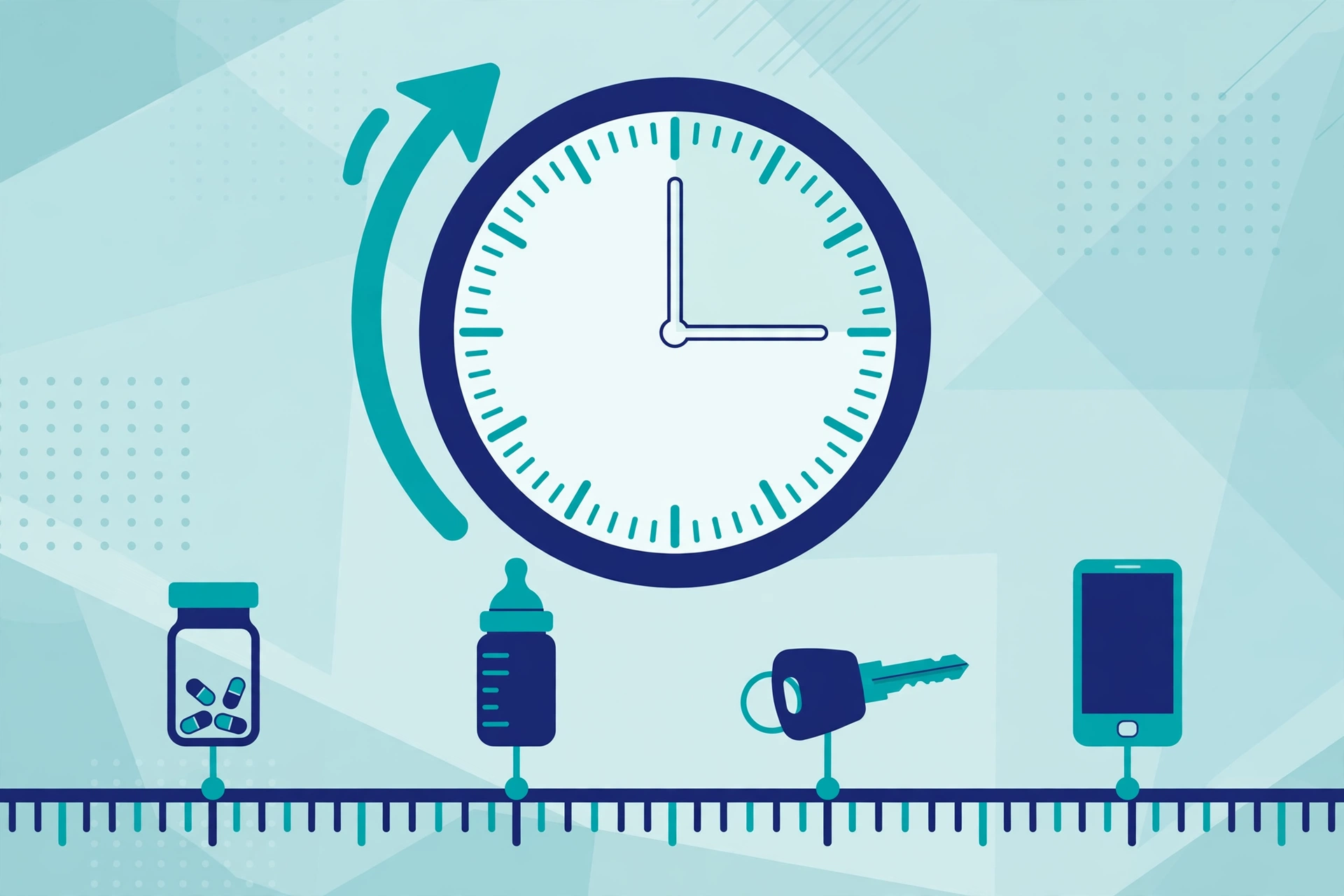
It’s a question that sounds trivial until you’re standing in a pharmacy wondering when you last took your pill, or staring at a parking ticket trying to prove when you arrived. “What time was it 5 hours ago?” is never really about arithmetic — it’s about reconstructing a moment that matters. Every top-ranking page gives you a bare number and a “how to subtract” lesson, as if you were doing homework. This guide treats your search like what it is: an investigation. We’ll pin down the exact moment, check whether it crossed into yesterday, convert it for anyone in another timezone, and help you build a proper timeline log you can actually use. Because nobody searches this out of mathematical curiosity — you are reconstructing something real: a medication dose, a baby’s feed, a parked car, a promise someone made.
Quick Answer: 5 hours ago was the current time minus 5 hours. But the useful question is: what happened then — and what time was that for everyone else involved?
What Happened? (Tag Your Moment)
Start with the event — it determines what you need next:
Took Medication
Note the exact timestamp (5 hours ago = __:__). Most dosing schedules need the NEXT dose time too: add your interval to the reconstructed time. Log it — the next ‘when did I last take it?’ is already coming.
Baby’s Last Feed / Sleep
Pediatric tracking runs on elapsed time: 5 hours ago the feed happened at __:__. Next feed is typically 2–3 hours after that — which may be now. Log feeds in a running timeline rather than doing this math each time.
Parked the Car / Meter Expiry
If the meter allows 5 hours and you parked 5 hours ago, you’re at the limit — move now. For incident reports, the exact timestamp plus location is what authorities need.
They Said They’d Call
Five hours of silence: note when the promise was made (__:__) versus now. For your own records, the gap is documented.
Timeline Ruler: Now ← 5 Hours Ago
Visualize the span: mark NOW on the right, count back 5 hours to the moment. Critical check — did you cross midnight? If yes, ‘5 hours ago’ was YESTERDAY, and any log, report, or message referencing it needs the correct date. This midnight boundary is the #1 error in reconstructed timelines.
What Time Was That for Them? (Dual Timezone)
If the other party is in another timezone, convert: take your reconstructed local time, apply the offset. Example: 5 hours ago was 10:00 AM your time (EST); for them in PST that’s 7:00 AM — they were asleep, which explains the silence. Side-by-side comparison beats mental math every time.
Build Your Log (Printable Timeline)
Stack your reconstructed events into a timeline: timestamp, event tag, timezone note, next-action reminder. Print or save it — medication logs, baby tracking, incident reports, and parking disputes all get stronger with a written timeline versus a remembered one.
Quick Conversions
5 hours = 300 minutes = 18,000 seconds = 18,000,000 milliseconds. Elapsed check: if you’re unsure whether it was 5 or 6 hours ago, the slider test — does the reconstructed moment match a known anchor (a meal, a show, a message timestamp)? Anchors beat arithmetic.
Conclusion
Five hours ago was a moment, not a math problem — and now you can prove it. You’ve got the exact timestamp, you’ve checked the midnight boundary (the error that corrupts more timelines than any other), you’ve converted it for anyone in another timezone, and you know how to stack it into a printable log. Whether it was medication, a baby’s feed, a parked car, or a promise someone made, the reconstructed moment is now evidence instead of a vague memory. Next time, log it the instant it happens — future you, mid-investigation at 2 AM, will be grateful.
Frequently Asked Questions
What time was it 5 hours ago?
Current time minus 5 hours — check whether that crosses midnight into yesterday.
How do I log medication times?
Record the exact timestamp when taken; compute the next dose from that, not from ‘about 5 hours ago.’
What if 5 hours ago was yesterday?
Then every reference to it needs yesterday’s date — the most common timeline error.
How many minutes is 5 hours?
300 minutes.
How do I convert for another timezone?
Take your local reconstructed time and apply the hour offset between zones.
Our Hours Ago Calculator works out past times instantly. Official US time is kept by NIST and displayed at time.gov.