The metric system was designed so conversions like this need no memorization — just move the decimal point. Yet liters and milliliters still confuse cooks switching from cups. Here is the whole ladder in one place.
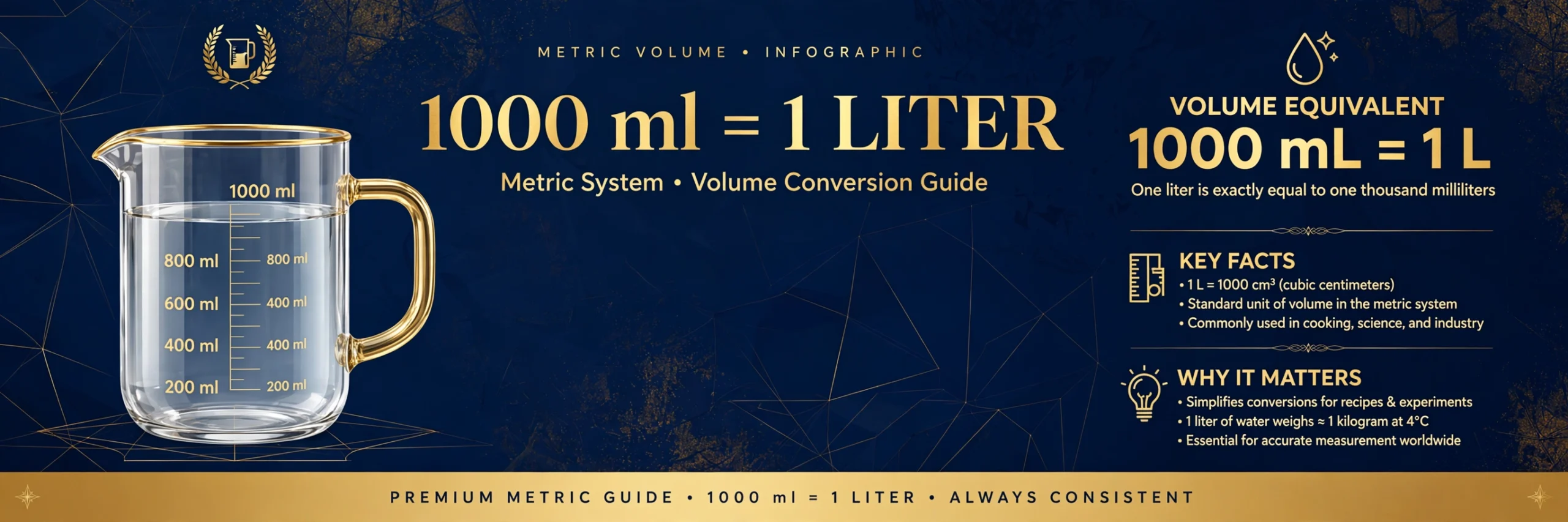
Quick Answer: There are exactly 1,000 milliliters in one liter.
The Metric Ladder
Milli means one-thousandth, so 1,000 milliliters make a liter. Going up: 1,000 liters make a kiloliter (a cubic meter). Going down: each milliliter divides into 1,000 microliters. Common kitchen rungs: 250 mL is a quarter liter (about 1 metric cup), 500 mL is half a liter, 750 mL is a standard wine bottle, 1,000 mL is a full liter.
Liters vs Cups
One US cup is 236.6 mL, so a liter holds about 4.23 US cups. A metric cup (250 mL) divides a liter into exactly 4 — one reason metric recipes are easier to scale. Two liters is about half a US gallon (2.11 quarts). The metric definitions used here are part of the SI system maintained internationally, with US guidance published by NIST.
Practical Conversions
Half a liter: 500 mL. Quarter liter: 250 mL. 2 liters: 2,000 mL. A teaspoon is 5 mL, so a liter holds 200 teaspoons. A tablespoon is 15 mL, so a liter holds about 66.7 tablespoons.
Milliliters in the Containers You Use Every Day
The ladder becomes real when it matches your shelf. A standard water bottle is 500 mL — exactly half a liter. A wine bottle holds 750 mL, three-quarters of a liter. An American soda can is 355 mL, a European one 330 mL.
A shot glass runs about 44 mL, a cup of coffee roughly 240 mL, and the typical bathtub fills to around 300 liters, or 300,000 mL. Medicine makes the small end matter: a teaspoon dose is 5 mL and a child’s dose is often 2.5 mL, which is why pharmacists insist on the dosing syringe instead of a kitchen spoon.
Reading labels becomes faster with three more anchors. A standard American cup is 237 mL, close to a quarter liter. A tablespoon is about 15 mL and a teaspoon 5 mL, which is why medicine bottles dose in milliliters worldwide. And a two-liter soda bottle — the one size America kept metric — holds 2,000 mL, or about 67.6 fluid ounces, a conversion hiding in plain sight in every grocery store.
Handy tool: Need the number fast? Use our free Unit Converter — instant results, no sign-up.
Conclusion
One thousand milliliters, no exceptions and no memorization tricks needed — that is the quiet beauty of the metric system. Every step of the ladder is a clean power of ten, from the 5 mL teaspoon of medicine to the 300,000 mL bathtub.
Once the anchors click — 500 mL in a water bottle, 750 in a wine bottle, 250 in a metric cup — you stop converting and start recognizing. American cooks may keep their cups for baking tradition, but for everything poured, dosed, or drunk, liters and milliliters are simply easier to think in. A thousand to one: the friendliest ratio in measurement.
Frequently Asked Questions
How many ml in a liter?
Exactly 1,000 milliliters.
How many ml in half a liter?
500 milliliters.
How many cups in a liter?
About 4.23 US cups or exactly 4 metric cups.
Is 1000 ml the same as 1 liter?
Yes — identical, by definition of the metric system.
How many liters in a gallon?
About 3.785 liters in a US gallon.