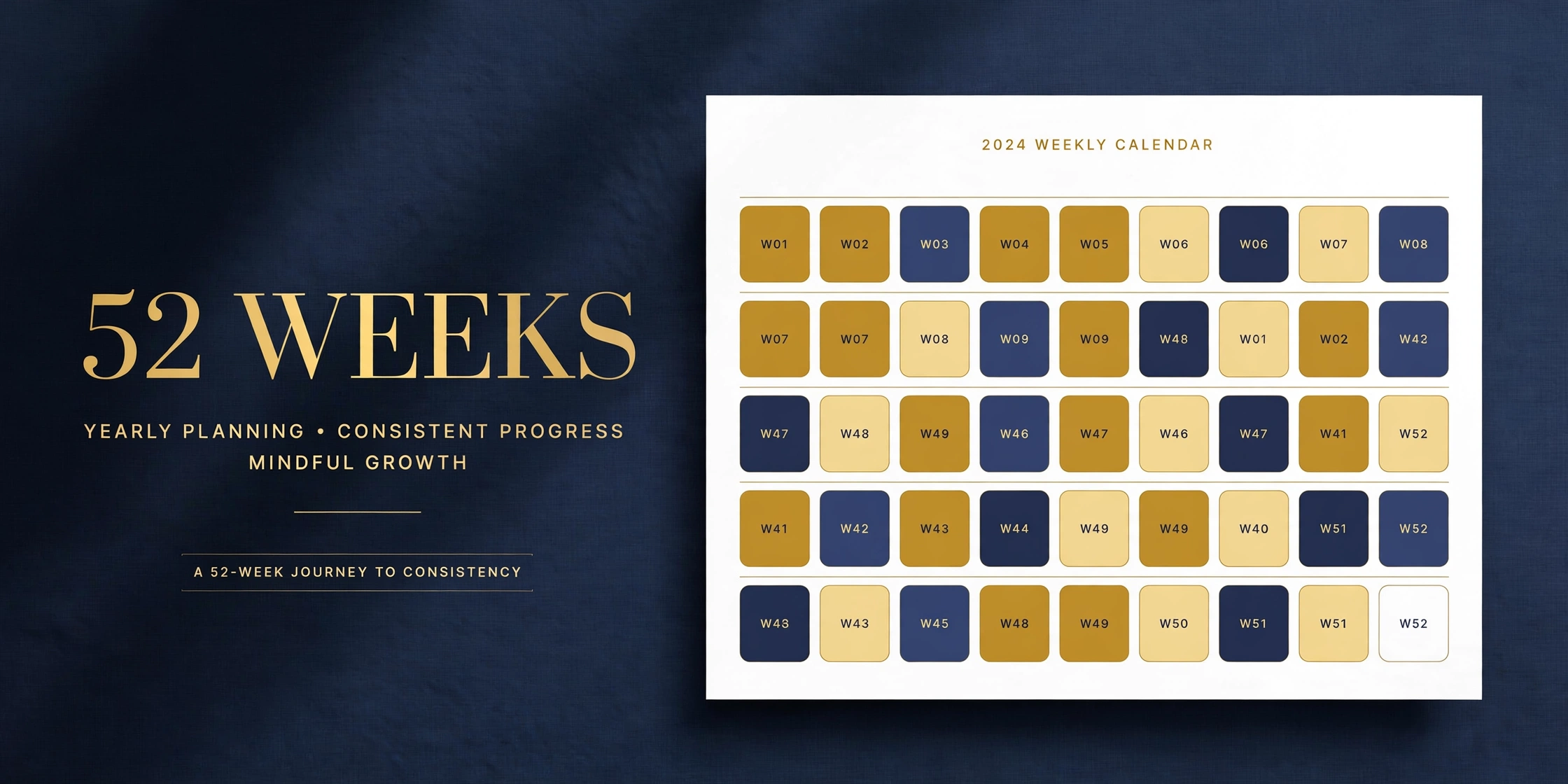
52 full weeks plus 1 extra day (2 in a leap year). But ask a payroll department or an ISO auditor and you might hear “53” — here’s why both answers are right.
The Simple Math
365 ÷ 7 = 52 weeks + 1 day. 366 ÷ 7 = 52 weeks + 2 days. That leftover day means every year, each date shifts one weekday forward (two after a leap year) — which is why your birthday falls on a different weekday each year.
When Is It 53 Weeks? (ISO Weeks)
The ISO 8601 standard numbers weeks 1–53, and a year gets 53 weeks when Jan 1 is a Thursday (or a Wednesday in a leap year). Recent 53-week years: 2015, 2020, 2026. About 71% of years have 52, the rest 53. Retailers with 52/53-week fiscal calendars care deeply about this — an extra week of sales changes annual comparisons.
Why It Matters: Payroll
Paid biweekly? You get 26 paychecks in a normal year — but in years where the calendar aligns, you get 27. That’s a whole extra paycheck’s worth of cash flow timing that payroll systems have to handle. Employees love it; accountants plan for it months ahead.
Weeks Breakdown
| Common year | Leap year | |
|---|---|---|
| Full weeks | 52 | 52 |
| Leftover days | 1 | 2 |
| Biweekly pay periods | 26 | 26 (sometimes 27) |
| Weekend days | 104 | 104 |
| ISO weeks | 52 (sometimes 53) | 52 (sometimes 53) |
Year-by-Year: 52 or 53 Weeks? (2024–2032)
| Year | Weeks | Why |
|---|---|---|
| 2024 | 52 | Leap year starting Monday — 366 days still fits 52 weeks + 2 days |
| 2025 | 52 | Common year |
| 2026 | 53 | Starts on Thursday — ISO 53-week year |
| 2027 | 52 | Common year |
| 2028 | 52 | Leap year starting Saturday |
| 2029 | 52 | Common year |
| 2030 | 52 | Common year |
| 2032 | 53 | Leap year starting Thursday — next 53-week year |
ISO Weeks Explained: Why Thursday Decides
The ISO 8601 standard defines week 1 as the week containing the year’s first Thursday. A year gets 53 ISO weeks when January 1 falls on a Thursday — or on a Wednesday in a leap year. This is the system behind every “Week 24” label in project management, European payroll, and logistics. The US week-numbering (weeks starting Sunday) can disagree by one — so when a European client says “week 30,” verify which system they mean.
Planning Your Year in 52 Weeks
Think of the year as 52 sprints, not 12 months. Quarterly goals become 13-week blocks; a “read 24 books” goal becomes one book every ~2.2 weeks. The weekly frame beats the monthly one because weeks are uniform — every week is 7 days, while months wobble between 28 and 31. Financial planners love this too: 52 weekly savings deposits beat 12 monthly ones for habit formation, even at the same total.
The 53rd Week: Payroll and Planning Chaos
In a 53-week year like 2026, salaried payroll gets interesting: 26 biweekly paychecks usually cover 52 weeks, so the extra week can mean an extra paycheck for biweekly employees (27 instead of 26) — or an employer’s quiet windfall if they don’t adjust. Weekly-paid workers simply get 53 paychecks. If you’re budgeting 2026, check whether your employer recognizes the 53rd week; the difference is a full week’s pay appearing or vanishing. Subscription and lease math shifts too: a “weekly” $50 subscription costs $2,650 in a 53-week year, not $2,600.
Weeks vs Months: Why Project Managers Count Weeks
Months are irregular (28–31 days); weeks are always 7. That’s why construction, software, and film production schedule in weeks: “week 12 deliverable” means the same duration everywhere, while “March deliverable” could mean 28 or 31 days of runway. The ISO week system exists precisely to give business a uniform ruler. When someone gives you a deadline in months, convert to weeks immediately — 3 months ≈ 13 weeks, and that precision changes planning.
Fiscal Years and the 52/53-Week Problem
Retailers like Walmart and Tesco don’t use calendar years — they use 52/53-week fiscal years ending on the Saturday nearest January 31. Every 5–6 years, a 53rd week appears, and comparable-sales figures get an asterisk: “up 4%, or 2% excluding the 53rd week.” Investors who don’t know this misread earnings. The IRS even has a dedicated 52/53-week tax year election (Section 441(f)) for businesses that want it. If you run a business on weekly cycles, the fiscal 52/53-week year eliminates month-length distortion from your books entirely.
Conclusion
A year holds 52 full weeks and one spare day — two in a leap year — and that single leftover day is the source of almost every calendar surprise, from shifting birthdays to the occasional 53-week year. Count in weeks and the year becomes a clean, comparable unit: payroll cycles, project plans, and fiscal reports all line up without month-length distortion.
The habit worth keeping is simple. Whenever a deadline, salary, or sales figure is quoted in months or years, translate it into weeks before you judge it. Weeks never change their length, and once you plan in them, the calendar stops playing tricks on you.
Frequently Asked Questions
How many weeks are in a year exactly?
52.14 in a common year (365/7), 52.29 in a leap year. In whole weeks: 52, with a day or two left over.
Why do some years have 53 weeks?
Under ISO 8601 week numbering, years starting on Thursday (or Wednesday in leap years) contain 53 numbered weeks. It’s a labeling quirk, not extra time.
How many weekends are in a year?
52 full weekends (104 weekend days), plus the leftover 1–2 days which may or may not fall on a weekend.
Does 2026 have 53 weeks?
Yes — Jan 1, 2026 is a Thursday, making 2026 a 53-ISO-week year.
How many biweekly paychecks in a year?
Usually 26. In some calendar alignments (like 2026 for many schedules), 27 — the famous “extra paycheck year.”
Related Tools
- Days Between Two Dates — weeks between any dates
- Days From Today — plan week by week